

Mario C. Giannettino is a partner at Kaufman Borgeest & Ryan, where he practices in the firm’s medical malpractice, general liability and skilled nursing and aging services groups. He represents physicians, hospitals, assisted living facilities and home health agencies in high-stakes malpractice and liability matters.
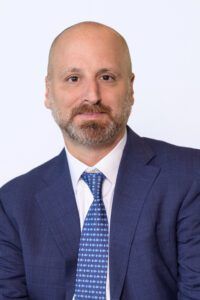
In addition to his litigation, trial, mediation and arbitration experience, Giannettino advises clients on risk management, regulatory compliance and health care privacy issues. He is also a certified professional in health care risk management and frequently writes and speaks on medical liability and health care defense topics.
How do the claims you are defending today compare with those from five or 10 years ago?
The legal framework has pivoted away from strict reliance on local medical customs and the actual care documented in the clinical record toward a broader, patient-centric definition of reasonable care. Medical knowledge is far easier for the public to find online, and jurors inevitably have their own notions of what reasonable care is. The definition of the standard of care seems to be transforming, which makes case outcomes less predictable. I am also seeing more instances of multiple providers being named in lawsuits rather than simply the health care organization.
What emerging legal or liability trend should health care executives be paying closer attention to over the next few years?
Health care executives must remain cognizant of how their organizations develop risk-mitigation strategies for AI integration and how that exposes them to liability. What types of clinical validation, audits, oversight and human controls were exerted before AI was used in the delivery of care? Expect IT and informatics personnel to be more involved in defending claims and educating counsel and jurors on how technology was integrated and validated before it reached the patient. I am also concerned about how workforce burnout will contribute to claims of understaffing.
What are the most common mistakes health care organizations make after an adverse event that later complicate a malpractice case?
The most fundamental error is delaying transparent communication with the patient. People cherish transparency. Most lawsuits I have defended in my career boil down to a lack of communication or the perception of a lack of communication. People are less likely to sue if they believe the health care provider was their advocate at the time care was being delivered.
What separates organizations that consistently defend claims successfully from those that struggle?
Organizations that consistently defend claims successfully have proactive risk management. Effective risk management combines robust data governance with close collaboration among counsel, claims professionals and risk managers. This should be a tripartite relationship where each collaborates and communicates regularly. Struggling organizations fail to align legal teams and claims professionals with the over-arching risk management operations. We should not be operating in individual silos.
How has jury sentiment changed in recent years, and what does that mean for defense strategy?
Some people feel that jury sentiment has shifted toward deep institutional distrust and heightened anti-health care bias. That is a pessimistic view, but verdicts, unfortunately, can sometimes reflect that reality. Conversely, defense verdicts rarely get shouted from the rooftops. Regardless, defense strategies should incorporate not only superior knowledge of medicine, but image-polishing for your client. We have to change the narrative back to trust in medicine and health care providers. Also, because plaintiffs aggressively anchor high-damage figures, the defense can consider counter-anchoring. Providing a reasonable alternative figure backed by actual math rather than speculation can be effective in the right case. Voir dire also has changed. Selecting a jury requires specialized testing of biases rather than relying on legacy demographics.
If you could recommend one investment that would have the greatest impact on reducing malpractice risk, what would it be?
Teach active listening, empathy and clear expectation-setting to prevent the breakdown of trust. For example, we can agree that the chart is the single most important piece of evidence. Documentation should accurately reflect collaborative decision-making by providers, patients and families rather than rely on checkboxes or drop-down menus. Document what the patient or family said to you. This becomes even more important with AI-generated notes and ambient scribes. We have to show that patient care aligned with patient expectations or that an adverse outcome was clinically unavoidable. Real-time, honest communication at the time care was delivered is key.