


A small number of million-dollar medical malpractice claims are having an outsized impact on insurance strategies, even as most indemnity payments remain well below that threshold.
A 2026 Crittenden Medical Liability benchmark report found that 70% of survey respondents reported median medical malpractice indemnity payments between $100,000 and $500,000. But claims exceeding $1 million continue to influence underwriting, pricing and risk management decisions.
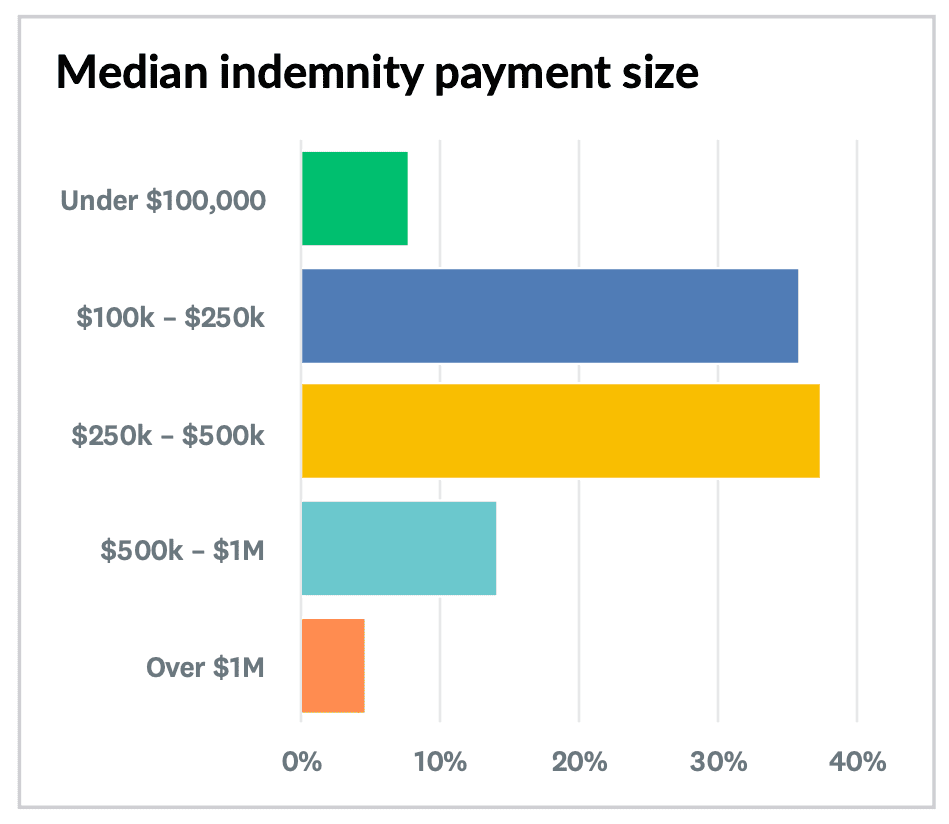
The report, based on survey responses from health care providers, insurers, brokers and legal professionals nationwide, points to larger jury verdicts and settlement expectations, social inflation, changing jury behavior and evolving plaintiff attorney strategies as key drivers of claim severity.
Million-dollar claims shape the market
While only a small percentage of malpractice cases go to trial, insurers, hospitals and plaintiff attorneys pay close attention to large jury verdicts, which influence settlement negotiations and drive settlement values higher long before a case reaches a courtroom, according to Richard T. Henderson, senior vice president at TransRe.
“While perhaps only 5% of claims end up being tried to conclusion, the claims which are tried remain a key barometer for making decisions and are meaningful in defining general negotiation parameters,” he said.

According to Henderson, the largest losses are typically associated with catastrophic injuries, long-term medical costs and lost wages. However, jury sentiment has increasingly become a factor in how cases are valued and resolved.
“A young plaintiff with decades of future pain and suffering, as well as years of economic losses, can easily push claim value into seven and eight figures,” he said. “More subtle factors can include underlying claim facts that cause a jury to become angry with the defendant. This could involve a medical professional who comes across as insensitive or is unprepared for the stress of testifying.”
Social inflation and nuclear verdicts drive severity
The benchmark report identified social inflation and nuclear verdicts as the emerging risks that concern medical malpractice professionals most. Respondents also cited staffing shortages and fatigue, litigation funding, AI-assisted clinical decision tools and private equity as growing areas of concern.
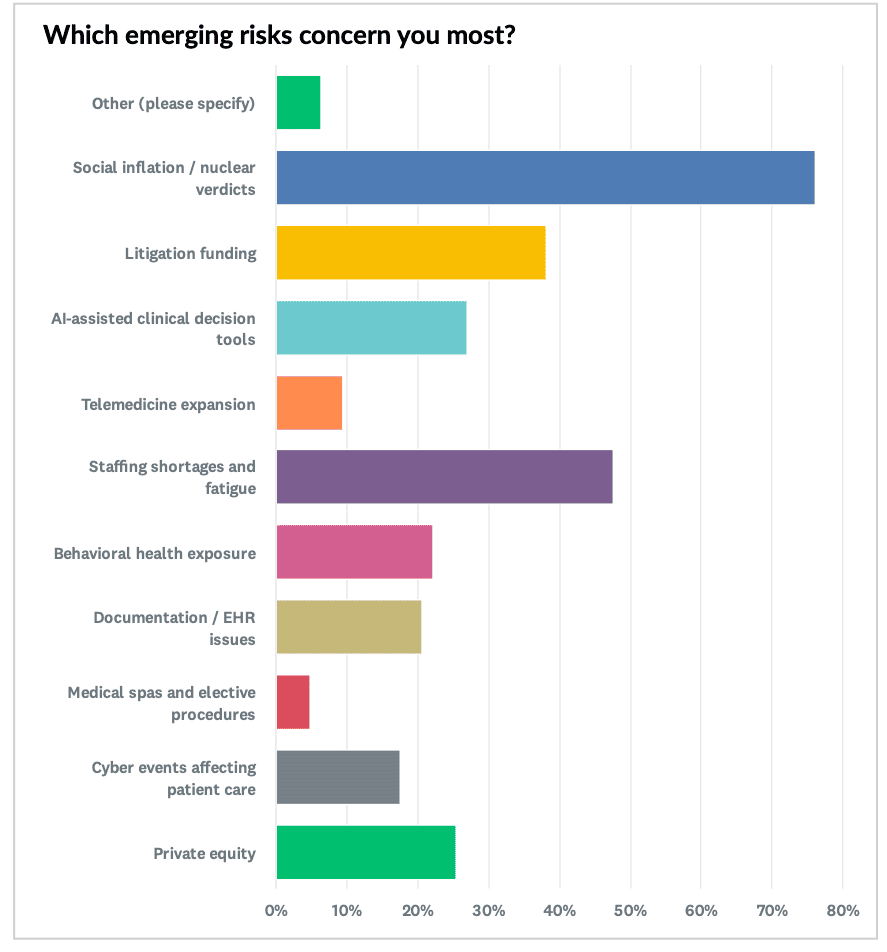
Henderson defines social inflation as the increase in claim valuations at a pace that exceeds general economic inflation. He attributes the trend to several factors, including society’s desensitization to large sums of money, shifting jury sentiment, increased exposure to large verdicts through social media and attorney advertising, distrust of corporate entities and changing societal views about accountability and compensation. Those same forces, he said, contribute to the rise of nuclear verdicts.
“Nuclear verdicts and attorney advertising are key examples of what we refer to as ‘anchoring.’ Billboards and other advertising are used to plant the seed in the prospective jurors’ minds about what may be a reasonable award for a given injury,” Henderson said.
He also believes some juries have become less supportive of health care providers since the pandemic, potentially contributing to larger plaintiff awards.
“Focus groups and mock trial exercises have identified significant jury animosity toward medical professionals and health care entities stemming from the pandemic,” Henderson said. “Even though many of these positions have been debunked, there is still a significant amount of disinformation and misinformation that is believed by a meaningful percentage of the jury pool, which makes jurors less supportive of the medical community.”
Plaintiff strategies continue to evolve
The benchmark report identified evolving plaintiff strategies and litigation funding as growing concerns for the industry. Respondents cited more aggressive litigation tactics, increased willingness to pursue higher-value claims and the growing use of litigation funding to support prolonged legal battles.
Henderson said plaintiff attorneys are increasingly sharing trial strategies, leveraging technology and data analytics and enlisting specialized trial talent from around the country.
“Some plaintiff attorneys have written extensively about how to drive up claim values and have greater success at trial,” he said. “Others are using advanced AI to refine trial tactics and convince jurors to award larger sums. Some plaintiff attorneys travel extensively across state lines and may parachute into a trial at the 11th hour, which can catch the defense team off-guard and increase claim values.”
For medical malpractice professionals, the challenge is no longer limited to evaluating the facts of a claim. The benchmark report and Henderson’s insights suggest that broader forces, including jury attitudes, social inflation and evolving litigation tactics are playing a growing role in claim outcomes. In response, insurers and health care providers are increasingly focused on proactive risk management and litigation preparedness as they work to navigate a rapidly changing liability environment.