


A 2026 Medical Liability Benchmark Report from Crittenden Medical Liability found that claims activity has remained stable while overall costs continue to rise.
The report, based on survey responses from health care providers, insurers, brokers and legal professionals nationwide, found that claim frequency and volume remain elevated but stable. Most respondents reported either no change or only slight changes in claims activity. However, even without a surge in claims, the financial burden of medical malpractice continues to increase because of high-severity claims.
“Severity is up for settlements and verdicts,” said Brant Poling, president and managing partner at Poling Law. “I don’t believe injuries are worse than they have been. However, the damages awarded are up substantially. Settlement demands are exceedingly higher, and plaintiffs are starting high and staying high throughout the entirety of the case.”
For risk managers, the rise in claim severity presents a significant challenge.
“Even if overall claim frequency remains relatively stable, continued growth in severity will affect reserves, captive funding, excess insurance costs and the overall cost of medical malpractice insurance,” said Douglas Shaw, vice president of risk management and insurance at RWJBarnabas Health.
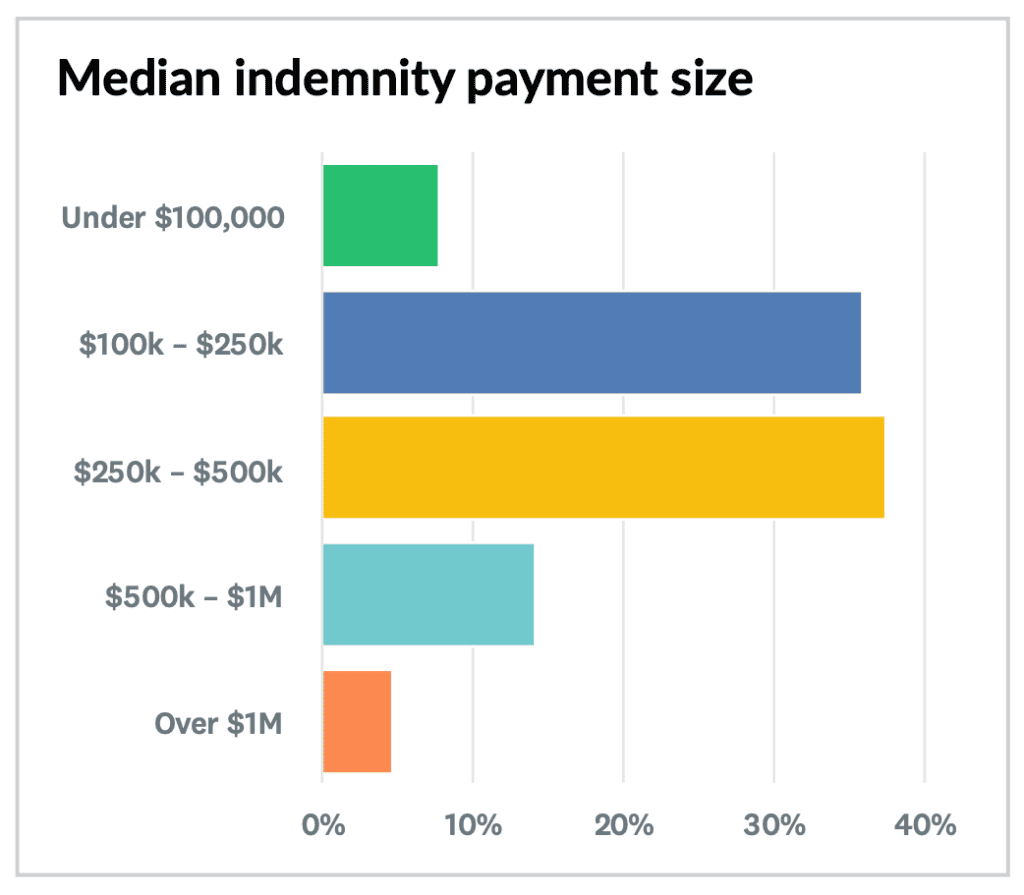
According to the report, most claims fall within predictable indemnity ranges, and only a small percentage of median payments exceed $1 million. While large claims remain uncommon, they continue to have an outsized effect on the market.
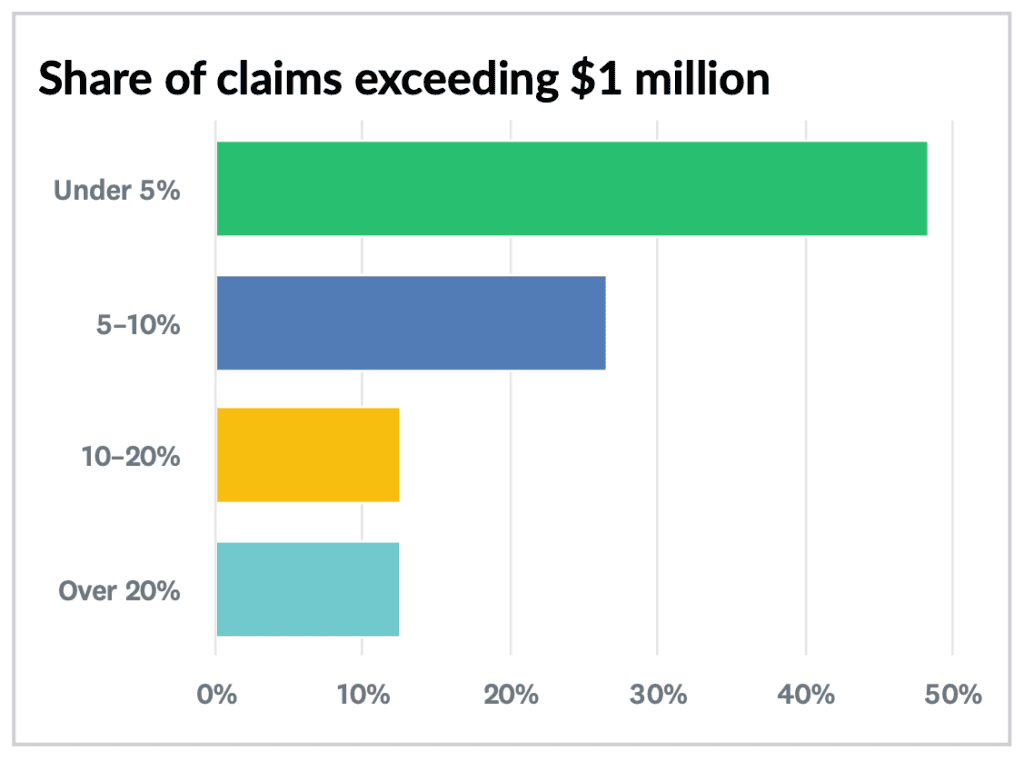
A significant share of respondents said 10% or more of claims exceeded the $1 million threshold. This “long tail” of high-severity claims continues to shape underwriting decisions, pricing and risk management strategies.
Managing risk
To proactively manage risk, Shaw recommends monitoring trends in the complexity of health care delivery.
“We are paying close attention to early event reporting, reserve development, operational trends and the issues being raised by underwriters,” he said. “Those early indicators can provide important insight into where risks may be developing before they become fully visible in industry data.”
Managing large-loss exposure remains critical, particularly in jurisdictions with higher litigation risk. Because severity, more than frequency, is driving cost increases, organizations should expect continued pressure on legal budgets, insurance costs and program structure. Prioritizing early claim identification and intervention, particularly in higher-risk specialties, may help mitigate those pressures.